Notice 3 of 5
Labels on the Drawers
Behind a stationery counter, nearly every drawer wears a small label: envelopes, rubber bands, glue sticks, receipt rolls.
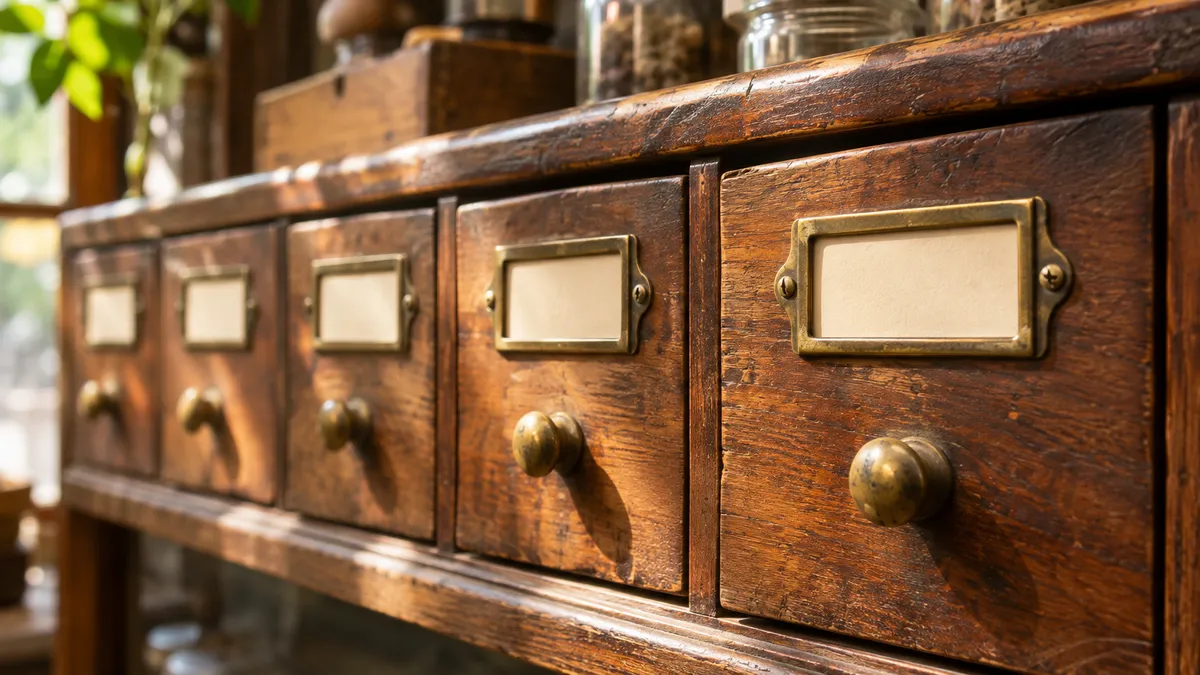
Nobody behind that counter memorizes forty drawers. The labels carry the information, and the clerk's attention stays on the person waiting to pay. A home can borrow the same arrangement, and it usually saves more searching than people expect.
Every object gets an address
- Begin with the three things you hunt for most often. For many households that means keys, reading glasses and the phone charger.
- Give each one a single home, such as a hook, a dish or a drawer, and label that home in large letters.
- Name drawers and cupboards for what lives inside them, not for the room: "batteries and tape," "warranties," "spare keys."
- On boxes in the closet or the garage, write the contents on two sides, so the label shows however the box is stacked.
- When something moves to a new place, change its label the very same day.
Masking tape and a marker are enough to start; a label printer is pleasant but optional. What matters is that each label can be read without glasses and that it tells the truth. A drawer marked "stamps" that actually holds old batteries does more harm than a drawer with no label at all.
The benefit goes beyond saved minutes. When objects keep fixed addresses, the mind is spared dozens of tiny searches every day, and the attention left over can go to the conversation, the book or the drive.
Check with your own doctor
Misplacing things on a crowded day happens to everybody. If it has become frequent, or objects keep turning up in spots that make no sense to you, mention it to a physician familiar with your health over the years.